
The internet has become infested with recruiters and hiring managers speaking about interviews as though they are preparing candidates for psychological warfare. Every time I open LinkedIn, somebody with suspiciously perfect lighting is urgently explaining how to “position yourself strategically”, “control the narrative”, “demonstrate executive presence”, or “avoid red flags that silently disqualify you”. Apparently blinking incorrectly now reveals poor leadership potential. The entire ecosystem increasingly resembles amateur behavioural science conducted by people who discovered engagement metrics five minutes ago and decided the rest of us must now perform for survival.
What irritates me most is not even the theatre itself. It is the agitation. It reminds me of people who discover a perfectly clear mermaid pool in nature and immediately begin stomping through it with sticks. Suddenly the water is cloudy with mud, sand, leaves, and debris. The fish disappear. Everything becomes murky and anxious because somebody needed to feel important enough to justify their presence. That, to me, is modern hiring culture in a nutshell. People who were previously functioning perfectly well are now convinced they must optimise their facial expressions, rehearse authenticity, project curated enthusiasm, and memorise interview scripts simply to prove they deserve access to work.
Meanwhile, in the real world, actual work continues to happen in an entirely different manner.
Recently, a developer I know found himself in a bind on a project and reached out to me for assistance. His team speaks German. I do not. According to large portions of LinkedIn, this should apparently have resulted in catastrophic collapse. Nobody administered a behavioural assessment. Nobody asked me where I saw myself in five years. Nobody evaluated whether my personality aligned with the company’s “mission-driven collaborative innovation culture”. A problem simply existed, somebody trusted my mind enough to involve me, and work began.
That distinction matters far more than people realise.
There are millions of professionals this developer could have contacted. Millions. Yet here we are, collaborating across time zones, discussing systems, untangling issues, sharing screens, laughing at bugs, and somehow understanding one another perfectly well despite the supposed communication barriers. At one point he casually said to me, “You’ll learn a little JavaScript while you’re at it. You’ll be fluent after this.” I laughed, but the statement stayed with me because it revealed something many modern hiring systems fundamentally fail to understand about how capability actually develops.
Human beings do not merely acquire skills through formal pathways, standardised assessments, or rehearsed performance exercises. We learn because curiosity is activated. We adapt because somebody creates room for us to participate. We become more capable because trust exists before mastery does. That is how real collaboration functions. It is often messy, organic, conversational, and deeply human. Knowledge transfers through interaction far more naturally than many corporate systems are willing to admit.
Somewhere during all of this, I realised my ear had started tuning itself to German. Not fluently, mind you. More strangely than that. I had begun recognising little words, rhythms, repeated expressions, fragments of technical conversations, and the cadence of certain phrases. The voice actors in some of the software modules certainly did not help matters. To my complete surprise, I now think German sounds rather hot. Hotter than French, if I am being perfectly honest, although perhaps still not quite hotter than Castellano — and those I actually speak.
That, to me, is how humans naturally learn. Not through panic. Not through performance rituals. Through proximity, curiosity, repetition, humour, and connection. We absorb one another gradually when we are allowed to participate without fear.
Which is precisely why I find modern hiring culture so grotesque. It does not speak human. It speaks anxiety. It speaks coercion. It speaks behavioural theatre disguised as opportunity. Entire industries now exist to convince perfectly capable people that they must perform employability like trained seals under observation in order to deserve stability. The STAR interview method, personality diagnostics, AI screening tools, culture-fit rituals, and endless recruitment “strategies” all increasingly revolve around one thing: teaching people how to suppress natural behaviour in favour of rehearsed corporate choreography.
Ironically, the systems claiming to identify talent often seem almost entirely disconnected from how human competence actually emerges in practice. The best professional relationships I have had throughout my life did not begin because somebody interrogated my “personal brand” under fluorescent lighting while pretending to care about my long-term aspirations. They developed through work itself. Through reliability. Through problem-solving. Through calmness under pressure. Through people recognising that I could think clearly and contribute meaningfully when things became difficult.
That last point matters more than many organisations are comfortable admitting because it exposes the limitations of performance-driven hiring culture. A great deal of modern recruitment infrastructure is built around categorisation rather than recognition. It seeks measurable signals that are easy to quantify instead of qualities that are genuinely valuable in real operational environments. The result is an exhausting culture of self-performance where candidates are expected to constantly narrate their worth while the systems themselves become increasingly incapable of recognising substance organically.
Years ago, during one of those corporate professional-development workshops where everybody is sorted into vaguely scientific workplace personality categories, I was classified as an “organic worker”. At the time, I remember finding the phrase faintly ridiculous, like something printed on the side of artisan granola.
And yet, years later, I suspect it may have been one of the more accurate professional descriptions anybody ever assigned to me.
I do not seem to learn, collaborate, or solve problems through rigid procedural performance. I learn through immersion. Through conversation. Through proximity to systems and people. I absorb patterns gradually. I ask questions. I become curious. I follow threads. One minute I am helping untangle a project issue and the next minute somebody is explaining JavaScript to me while my ear quietly starts tuning itself to German vowels.
None of this would likely present particularly well inside a modern AI hiring model.
Modern recruitment systems increasingly seem designed to reward performance rather than participation. They favour candidates who can narrate themselves fluently under pressure, optimise their personalities into digestible behavioural signals, and perform confidence according to culturally specific corporate expectations. But human beings are not software packages awaiting classification. Some of us become valuable relationally and contextually over time. Through trust. Through steadiness. Through curiosity. Through the ability to work with people rather than merely perform for them.
The irony, of course, is that actual work exposes the difference very quickly. It becomes obvious who can stabilise a room, who can communicate clearly across disciplines, who can learn rapidly, who can collaborate without ego, and who can reduce friction instead of creating it. None of these qualities necessarily present themselves neatly during theatrical interview rituals. In many cases, the people best at performing employability are not always the people best at sustaining healthy, functional systems once the performance ends.
This is also where many AI-driven hiring models begin to reveal their limitations. They are excellent at sorting, filtering, ranking, predicting, and categorising. What they struggle to understand is emergence — the strange and deeply human process through which people become indispensable to one another over time. Indispensability is rarely just technical. It is emotional, relational, contextual, and cumulative. It develops because people remember who remained calm, who helped them think clearly, who solved problems without theatrics, and who made difficult work feel manageable.
The systems can scrape portfolios, parse CVs, analyse speech patterns, and score behavioural indicators all they like. They still cannot fully quantify why one person quietly becomes the centre of gravity within a project while another, despite all the correct buzzwords and interview polish, leaves everybody exhausted. That is because human collaboration does not function entirely through measurable outputs. Some of the most valuable professional dynamics emerge through trust, humour, curiosity, patience, and the willingness to learn together in real time.
Perhaps that is why so much modern hiring culture feels profoundly alienating to me. It assumes everybody wishes to be processed in the same way: interviewed, assessed, decoded, profiled, optimised. Maybe I do not want to perform for you. Maybe I do not believe human beings were meant to relate to one another primarily through behavioural interrogation rituals conducted under economic pressure. Maybe that makes me old-school. Fine.
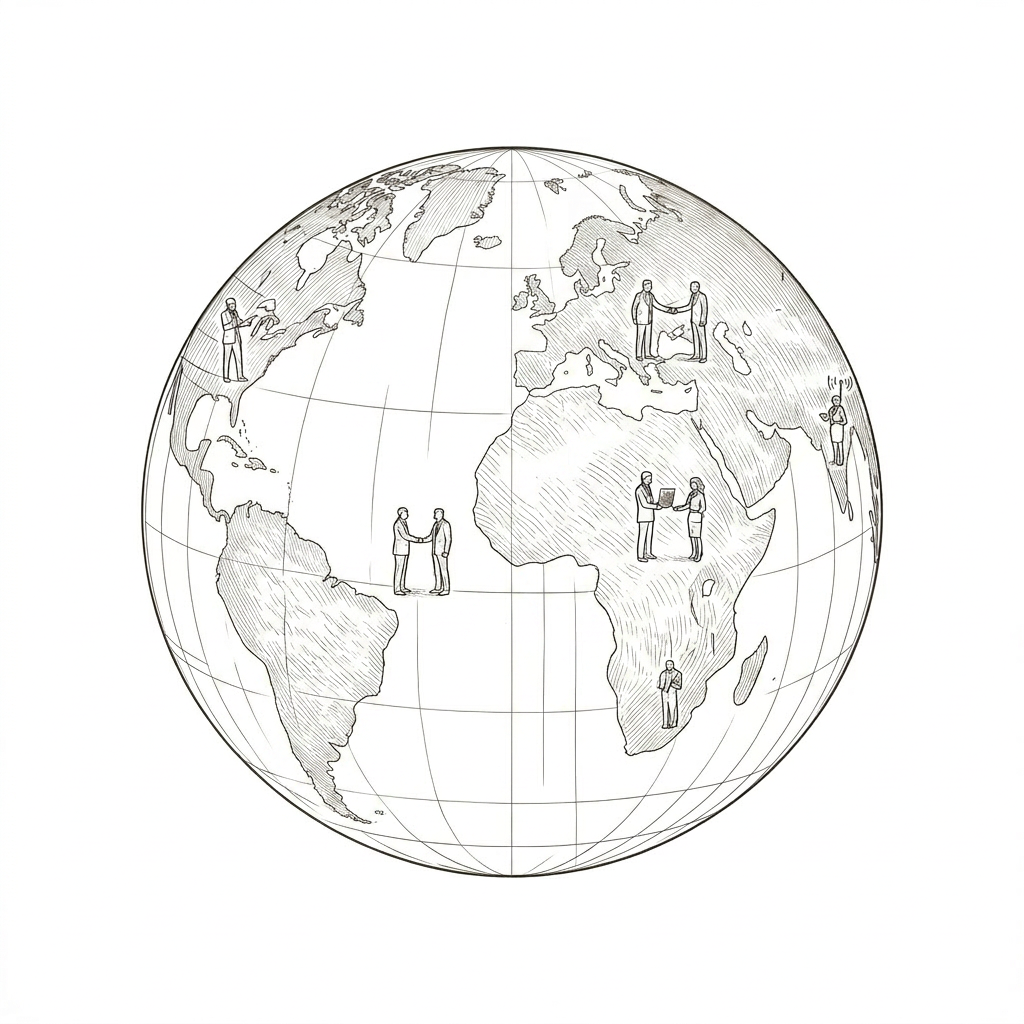
But if you genuinely need something from another human being — their expertise, their judgement, their years of experience — then perhaps the interaction should begin with mutual respect rather than psychological theatre. Some of us are still working that way quietly, across countries, time zones, and cultures.
The fact that these relationships continue to function perfectly well outside the dominant performance culture should tell us something about how narrow and culturally specific many modern hiring systems actually are. Not every professional culture emerged from the same Global North assumptions about labour, self-marketing, and capitalist performance metrics. Some of us still come from traditions where trust is built gradually, where conversation matters, where work speaks first, and where human beings are not immediately treated as datasets to be decoded for risk.
Perhaps that is what unsettles me most about modern professional culture. We are becoming increasingly obsessed with modelling people instead of knowing them. Increasingly focused on performance instead of participation. Increasingly determined to stir mud into perfectly clear water because anxiety has become a profitable business model in professional spaces.
As for me, I suspect I shall continue doing what I have always done: helping where I can, solving problems when asked, learning things accidentally, and speaking human wherever I go.