
“No certification teaches you how to survive that elegantly. Experience does.”
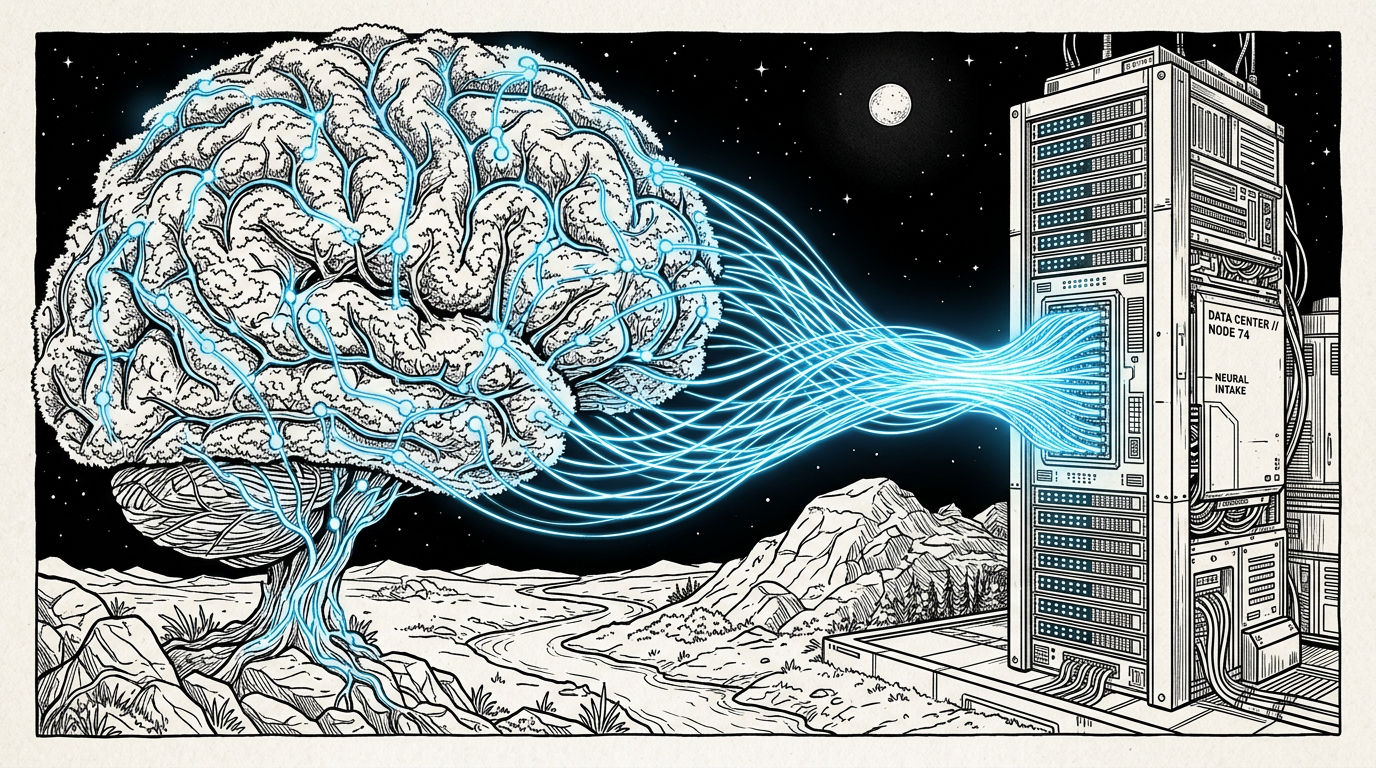
I wrote that line recently and realised afterwards that it explains much of the feverish obsession surrounding AI right now. What many industries are trying to extract is not merely labour. It is experience itself.
For years, organisations relied on experienced professionals because judgement could not be easily manufactured. You needed people who had survived real operational environments. People who had seen systems fail, projects collapse, stakeholders panic and timelines disintegrate. People who learned through repetition, pressure, mistakes, politics, observation and consequence.
That kind of knowledge takes years to build because it is not simply information. It is pattern recognition shaped by survival.
Now imagine the fantasy currently driving much of the AI economy.
What if organisations could capture enough of that human judgement, communication, troubleshooting, synthesis and decision-making logic to reduce their dependence on the humans themselves?
That is the dream.
Not innovation for humanity. Not liberation from drudgery. Rather, cost reduction.
Even AI systems themselves openly acknowledge this logic. Ask them directly how these systems improve and they will tell you quite plainly: they learn from enormous quantities of human-generated material, interactions, reasoning patterns, corrections, workflows and accumulated examples of professional judgement. The machine does not magically develop expertise in isolation. It is built upon vast layers of human intellectual labour, whether explicitly acknowledged or not.
That is precisely why so many experienced professionals feel uneasy.
The fantasy is that decades of accumulated professional instinct can somehow be extracted, modelled, standardised and redistributed infinitely at scale. Why continue paying senior professionals for lived expertise when you can attempt to convert fragments of their thinking into systems, workflows and machine-generated outputs?
You have to be sleeping under a rock to not know it is happening everywhere.
Writers are expected to train systems that may later replace portions of their work. Designers are told to feed aesthetic decisions into tools marketed as democratisation. Educators are pressured to convert years of teaching insight into reusable AI-driven content systems. Developers increasingly find themselves documenting reasoning patterns so thoroughly that organisations begin imagining the reasoning itself is now owned infrastructure.
The language surrounding all this is always optimistic, collaborative and inevitable.
The economics underneath it are considerably less romantic.
What makes this particularly unsettling is that many executives fundamentally misunderstand what experience actually is. They treat expertise as though it were a neat database of answers waiting to be extracted. In reality, experienced professionals are constantly making thousands of invisible contextual judgements.
They notice contradictions early. They sense risk before metrics detect it. They recognise manipulation patterns. They understand when frameworks no longer match operational reality. They improvise under pressure. They know when a process is technically correct yet practically disastrous.
Most importantly, they understand humans.
That is the part many systems still struggle to account for. Human environments are messy, political, emotional, irrational and unstable. Operational reality rarely behaves like clean training data.
This is why so many experienced workers feel uneasy watching the current AI gold rush unfold. It is not simple technophobia. Many of us already use these tools. The discomfort comes from recognising the broader economic direction underneath the marketing.
Entire industries are now attempting to mine accumulated human experience itself as raw material. And perhaps the strangest irony of all is this: the same professional ecosystems that spent years undervaluing experienced workers are suddenly racing to capture the knowledge those workers carry before they disappear.
Silly Rabbit, trix are for kids.